[launches] · · 2 min read
Ukraine’s $400 Shrike drones get AI-powered kamikaze upgrades for fire-and-forget strikes
Auterion’s Skynode S strike kits turn cheap FPV drones into autonomous target-trackers, with 50,000 units on the way to Ukraine.
By ByteBulletin Editor · Editor
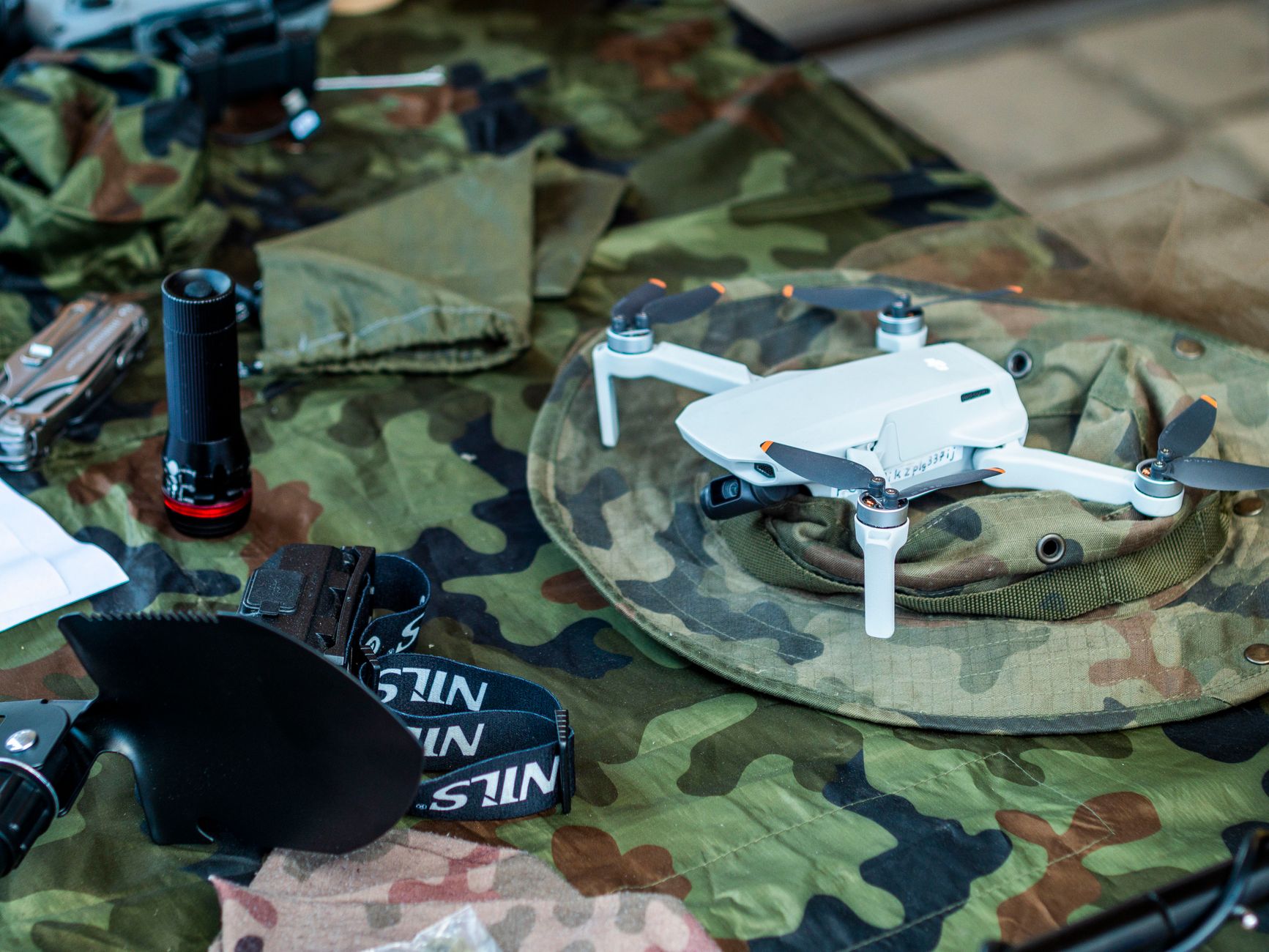
Ukrainian drone operators have already used $400 Shrike FPV drones to destroy Russian armored vehicles and even helicopters. Now, thousands of those drones are getting an AI upgrade that lets them autonomously track and strike moving targets without GPS or a constant radio link. In mid-July, the Ukrainian military began receiving Shrike drones from SkyFall fitted with Auterion’s Skynode S strike kits, which replace the stock flight controller with avionics that run AI onboard. Auterion and SkyFall plan to deliver 50,000 such drones over the coming months, funded by a $100 million contract from an unnamed European country (likely Germany).
The new capability is designed to be simple for operators. A human pilot flies the drone into the battlefield area, designates a target up to half a mile away, and then "flips the switch" to enter fire-and-forget terminal guidance mode. From that point, the drone uses its onboard camera to track the target visually, so it can continue its strike even if the radio link is lost to jamming or terrain. The operator can abort or retarget as long as they maintain a connection, but the drone does not need one for the terminal phase.
Each upgraded Shrike costs about $2,000, compared to the $400 manual version—a fraction of the cost of Western precision munitions that can run six or seven figures per shot. Auterion CEO Lorenz Meier stressed that the system is built around a Western Arm system-on-a-chip costing just $18, making the AI guidance affordable enough for mass deployment.
Swarm capability and rapid iteration
The Skynode S kits also enable future software updates for drone swarming. Auterion has demonstrated a single operator commanding three autonomous strike drones to take out three separate targets at a US military range, with the swarm able to reprioritize targets on the fly without human input. That could allow Ukraine to deploy more drones with fewer operators—Meier claims operators can be trained in about 60 seconds, a stark contrast to the extensive training required for traditional military drones.
Meier also praised Ukraine’s battlefield-driven development cycle, where companies iterate quickly based on real-world hit rates and failures. "A lot of the Ukrainian firms didn’t show up with a perfectly working product—they showed up with something that was better than nothing, and then iterated through a lot of failures towards a point where it works every single time," he said. That agility stands in contrast to slower Western procurement processes, which Meier criticized for buying expensive systems in small batches on multi-year timelines.
Despite the push toward autonomy, Auterion maintains a human-in-the-loop philosophy for target selection. Meier acknowledged that adversaries might force a shift toward fully autonomous engagements, but until that point, he believes a human should make life-or-death decisions. This tension between tactical advantage and ethical control is likely to shape the next phase of drone warfare—and the software that powers it. For developers, the takeaway is that edge AI, computer vision, and low-cost hardware are converging into practical, disposable systems that redefine what a "precision munition" means. The same stack that powers a $2,000 drone in Ukraine could find its way into everything from warehouse robotics to security systems, where cheap, reliable autonomy is the killer feature.
Get the signal, not the noise.
One short email when it matters. No recaps of recaps.
SHARE
RELATED
[launches] ·
Anthropic merges Claude chat and Cowork into one interface

[launches] ·
Cline v4.1.18 and CLI 3.0.62 ship Desktop app and major SDK updates
[launches] ·
Kungfu Launches Agent Handoff Protocol to Eliminate Context Loss

[launches] ·
Apple Simplifies EU App Store Fees to 5% for Alternative Distribution

[launches] ·
Suno Studio 2.0 transforms AI music generation into a full DAW with MIDI and custom AI effects
[launches] ·