[funding] · · 2 min read
SpaceX's AI pivot pays off: compute deals with Anthropic and Google fuel revenue surge, but losses persist
SpaceX's first earnings since its record IPO show AI compute deals and Starlink growth doubling revenue, but the company still loses money as capex balloons.
By ByteBulletin Editor · Editor
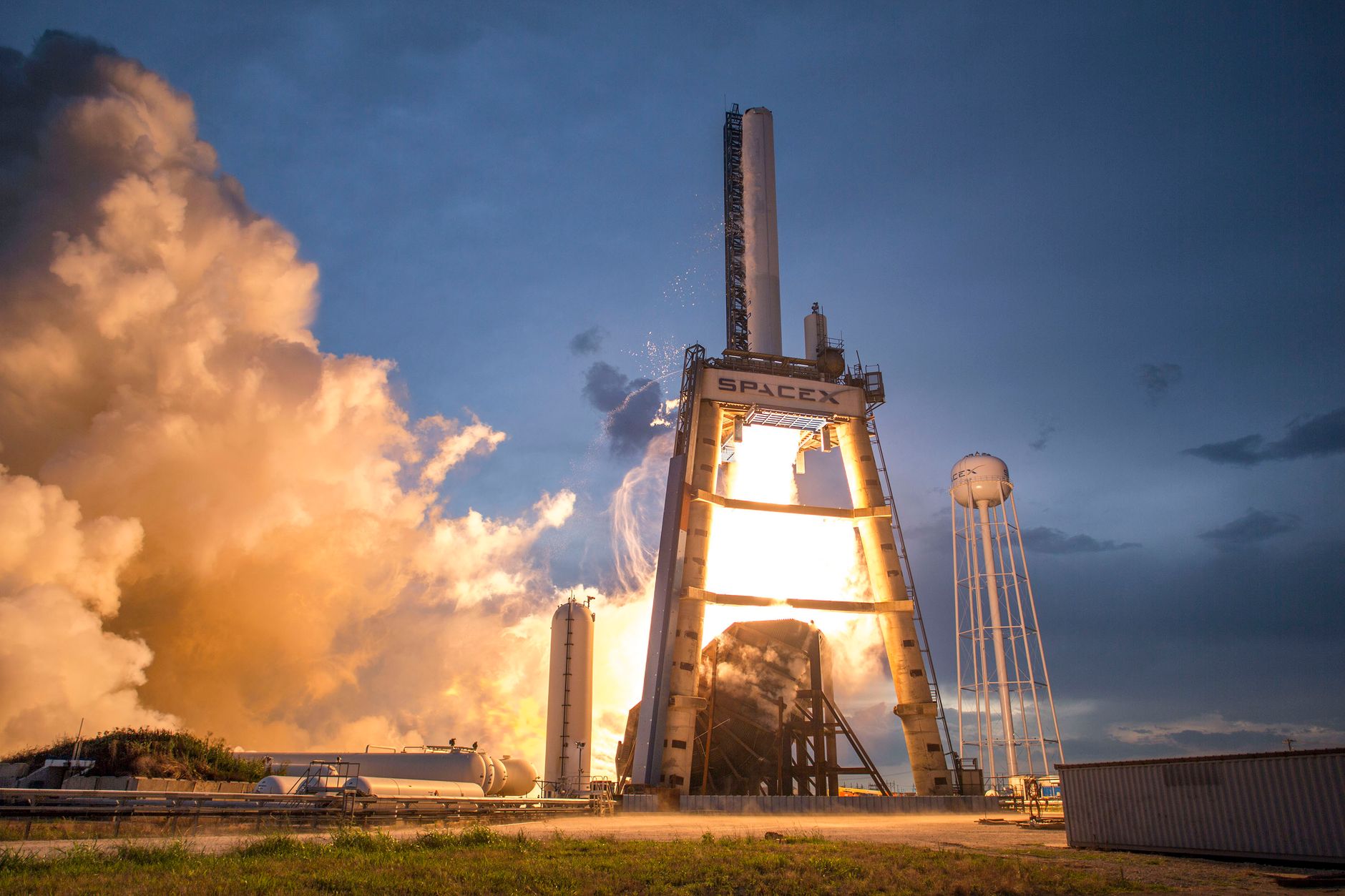
In its first quarterly earnings report since its record-breaking IPO, SpaceX revealed a company in the midst of a dramatic transition. Revenue doubled to $7.8 billion in Q2 2026, driven almost entirely by two AI compute deals with Anthropic and Google, which helped grow its AI division's revenue to $2.6 billion—more than triple the previous year. But the company still lost $541 million, and its ambitious spending plans—including building data centers in space—raise questions about its path to profitability.
The AI deals represent a strategic pivot for the company, which had struggled to compete with leading AI labs like OpenAI and Anthropic with its Grok model, which has been mired in scandals. Instead of training its own models, SpaceX decided to rent out its existing data center capacity in and near Memphis, Tennessee to other AI companies. CFO Bret Johnsen emphasized the high margins of these hosting deals, noting they "generated high incremental EBITDA margins."
The company's space division, while still a small part of revenue, remains the core of its long-term strategy. With $962 million in quarterly revenue, it's the foundation for Starlink—the only profitable segment—which generated $4.2 billion. But Starship, the rocket that will launch next-generation satellites, is a major cost driver, with space division costs up $389 million year-over-year.
Musk's vision goes beyond Earth. "We're building AI compute capacity at scale faster than anyone else, we believe, and we're significantly improving our AI models," he said on the investor call. The company aims to build data centers in space, a plan that depends on Starship's success. It has already launched 20 of the heavier satellites needed for full deployment, but a full 60-satellite launch remains distant.
The market's reaction was cautious: shares initially popped but then sank below the IPO price, closing at just over $125, down 8% in after-hours trading. Despite the revenue growth, investors seem focused on the company's bottom line—which is still deeply in the red. With a $100 billion war chest from the IPO and bond sale, SpaceX can afford to keep spending, but it will need to turn its booming AI division into a profitable business eventually.
As SpaceX integrates Cursor, the AI code editor it agreed to acquire, it's betting that its AI infrastructure can reach a $100 billion annualized revenue run-rate by the end of the year. But with the AI landscape shifting rapidly and competitors like CoreWeave offering similar compute, SpaceX's long-term success is far from guaranteed.
For developers, the real story is the growing commoditization of AI compute. SpaceX's pivot underscores that building AI models is expensive and risky, but selling shovels to the gold rush—providing compute to players like Anthropic and Google—is becoming a viable business, even for a rocket company.
Get the signal, not the noise.
One short email when it matters. No recaps of recaps.
SOURCES
SHARE
RELATED

[funding] ·
Vals raises $40M Series A led by Andreessen Horowitz

[funding] ·
Insight Partners diversifies AI bets against OpenAI and Anthropic concentration

[funding] ·
Cognition raises $2B at $48B valuation as AI coding market expands

[funding] ·
Mistral AI raises €3B in Europe's largest tech equity round
[funding] ·
Generalist hits $3B valuation as it bets on video-learning robot brains

[funding] ·