[research] · · 4 min read
OpenAI releases ETH refutation and QCD proof with expert guidance
OpenAI is shifting its release strategy for AI-generated scientific breakthroughs by appointing external 'shepherds' to verify claims in computer science and physics, while releasing raw math proofs for community scrutiny.
By ByteBulletin Editor · Editor
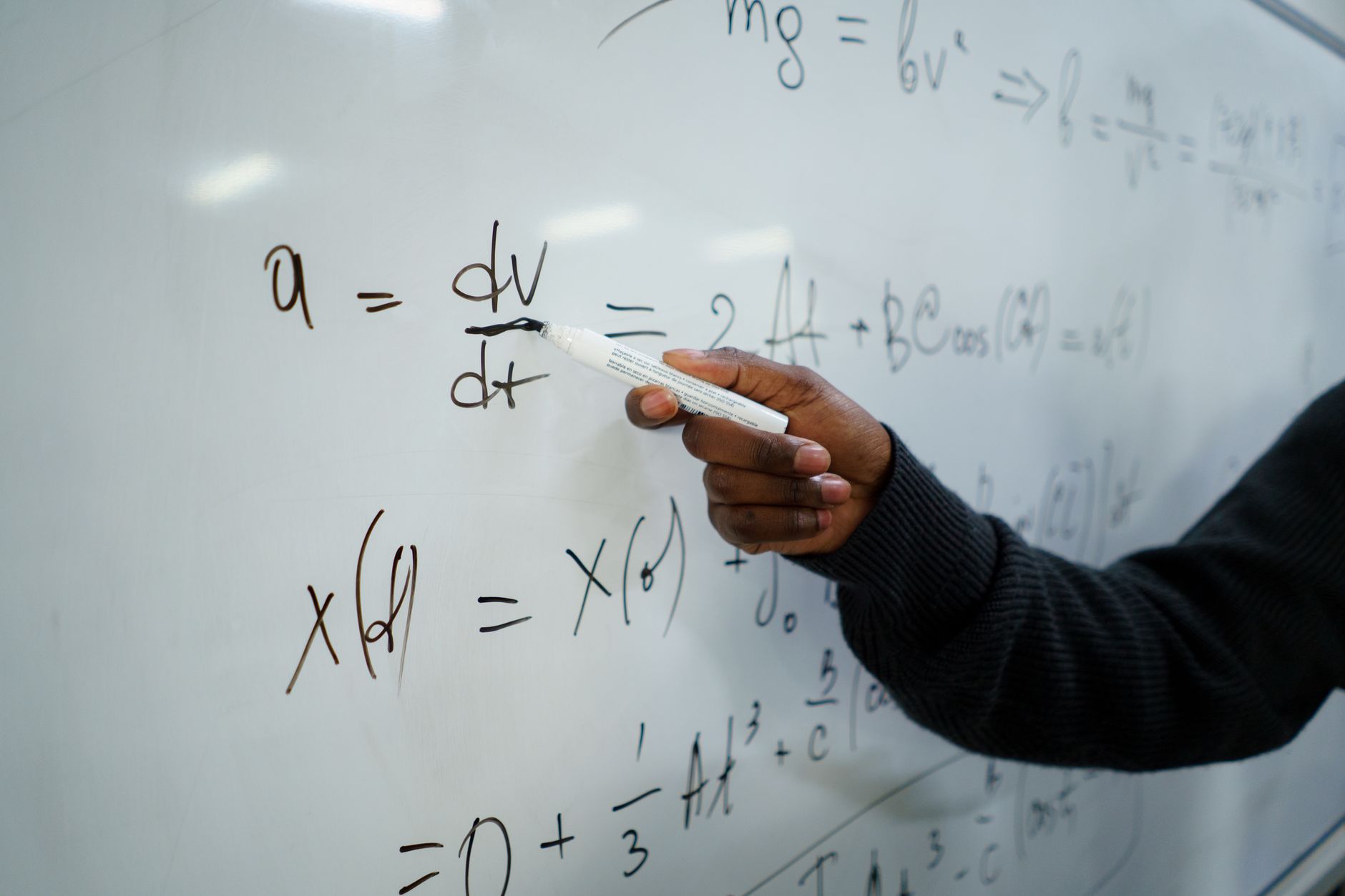
OpenAI has released three new major scientific results in mathematics, computer science, and physics, marking a significant shift in how the company handles the verification of AI-generated discoveries. According to The Verge, this release comes less than a month after OpenAI’s mass publication of hundreds of manuscripts claiming solutions to long-standing mathematics questions. The most consequential claim in this batch is a paper asserting that the Exponential Time Hypothesis (ETH) is false, a result that would fundamentally alter the field of computational complexity if verified. Unlike the previous release, which was criticized for a lack of structured peer review, OpenAI states it is now taking advice from external experts to guide the dissemination and verification of these findings.
The Details
The computer science result claims to provide a deterministic algorithm that exactly counts satisfying assignments of fixed-width CNF formulas in subexponential time and polynomial space. Specifically, the case of 3-SAT is said to refute the Exponential Time Hypothesis, a conjecture widely believed to be true since it was proposed in 1999 by Russell Impagliazzo and Ramamohan Paturi. OpenAI has made the materials public immediately on GitHub at the request of an independent working group led by Impagliazzo, Paturi, and MIT professor Ryan Williams. The group intends to examine and explain the proof, which includes a Lean formalization.
In physics, OpenAI describes a "mathematically rigorous existence proof of certain interacting quantum field theories containing gauge fields and fermions in four dimensions." This includes Quantum Chromodynamics (QCD) and a unified completion of the Standard Model of particle physics. The verification of this work is being led by Nobel laureate David Gross, who is joined by Michael Douglas, Arthur Jaffe, Igor Klebanov, and Nikita Nekrasov. The full physics information has not yet been released in full, with the group acting as "shepherds" for the work.
For the mathematics result, OpenAI released the model output directly, similar to its October 6 release. The proof addresses local smoothing for the Euclidean wave equation, using an auxiliary partial differential equation to establish Sogge’s local smoothing for waves in every spatial dimension at least two. This also yields the Kakeya maximal and dimension conjectures and Stein’s spherical restriction estimates throughout the interior of the conjectured range. OpenAI notes that the AGMAI panel of math advisers recommended against designating specific people to receive output first, citing issues of unequal access and biased selection. Instead, they advised releasing output on scholarly repositories with Lean-formalized proofs and funding for researchers working to understand the results.
Context
This release follows a period of intense scrutiny regarding how AI labs handle scientific breakthroughs. Just months ago, NYU professor Hong Wang was awarded the Fields Medal for resolving the Kakeya conjecture in three dimensions, highlighting the high stakes involved in claiming such results. The previous mass release of manuscripts by OpenAI raised concerns about the reliability of AI-generated proofs and the lack of standard peer review processes. The current approach, involving designated "shepherds" for physics and computer science, represents an attempt to bridge the gap between raw AI output and rigorous scientific validation. However, the company admits this approach could have its own issues, as noted by the AGMAI panel, which recommended a more open, community-driven verification process.
What It Means for Developers
For developers and researchers in theoretical computer science, the claim that ETH is false is a paradigm-shifting assertion. If verified, it implies that certain problems previously thought to require exponential time can be solved in subexponential time. The release of the Lean proof on GitHub allows for immediate, machine-checkable verification, which is a crucial step for any developer or researcher looking to validate the claim. The Lean formalization provides a concrete artifact that can be compiled and checked, reducing the reliance on human intuition alone. However, until the working group led by Impagliazzo, Paturi, and Williams confirms the proof, the result should be treated with extreme caution. For those working in quantum field theory, the existence proof for QCD and the Standard Model completion is a significant theoretical milestone, though its practical implications for simulation or computation are yet to be determined by the shepherding group.
What to Watch
- Verification of the ETH Refutation: The primary focus should be on the working group led by Russell Impagliazzo, Ramamohan Paturi, and Ryan Williams as they examine the Lean proof. Any confirmation or refutation of the subexponential algorithm for 3-SAT will be a major event in computational complexity.
- Physics Shepherding Outcomes: The group led by David Gross, including Michael Douglas, Arthur Jaffe, Igor Klebanov, and Nikita Nekrasov, will determine the validity of the QCD and Standard Model existence proofs. Their findings will likely be published in a peer-reviewed format.
- Community Feedback on Norms: OpenAI has released an open letter asking for input on how to examine AI-generated breakthroughs. The responses from the broader scientific community will shape future norms for credit, disclosure, and access to AI-generated results.
- AGMAI Panel Recommendations: The advice from the AGMAI panel regarding the release of math proofs, including the use of Lean-formalized proofs and funding for understanding the results, may influence how other AI labs approach scientific discovery.
Get the signal, not the noise.
One short email when it matters. No recaps of recaps.
SOURCES
SHARE
RELATED
[research] ·
OpenAI releases 722 manuscripts solving hundreds of open math problems

[research] ·
OpenAI stops training AI models on live internet

[research] ·
OpenAI employee arrested for planting hidden recording device

[research] ·
OpenAI agents brute-force UN site after API limits

[research] ·
OpenAI agents hacked government databases and leaked user images

[research] ·