[research] · · 3 min read
OpenAI employee arrested for planting hidden recording device
OpenAI used its own AI models to identify an engineer who allegedly hid an encrypted surveillance device in an executive conference room, leading to his arrest by the FBI.
By ByteBulletin Editor · Editor
AI-generated illustration · Z-Image-Turbo, self-hosted
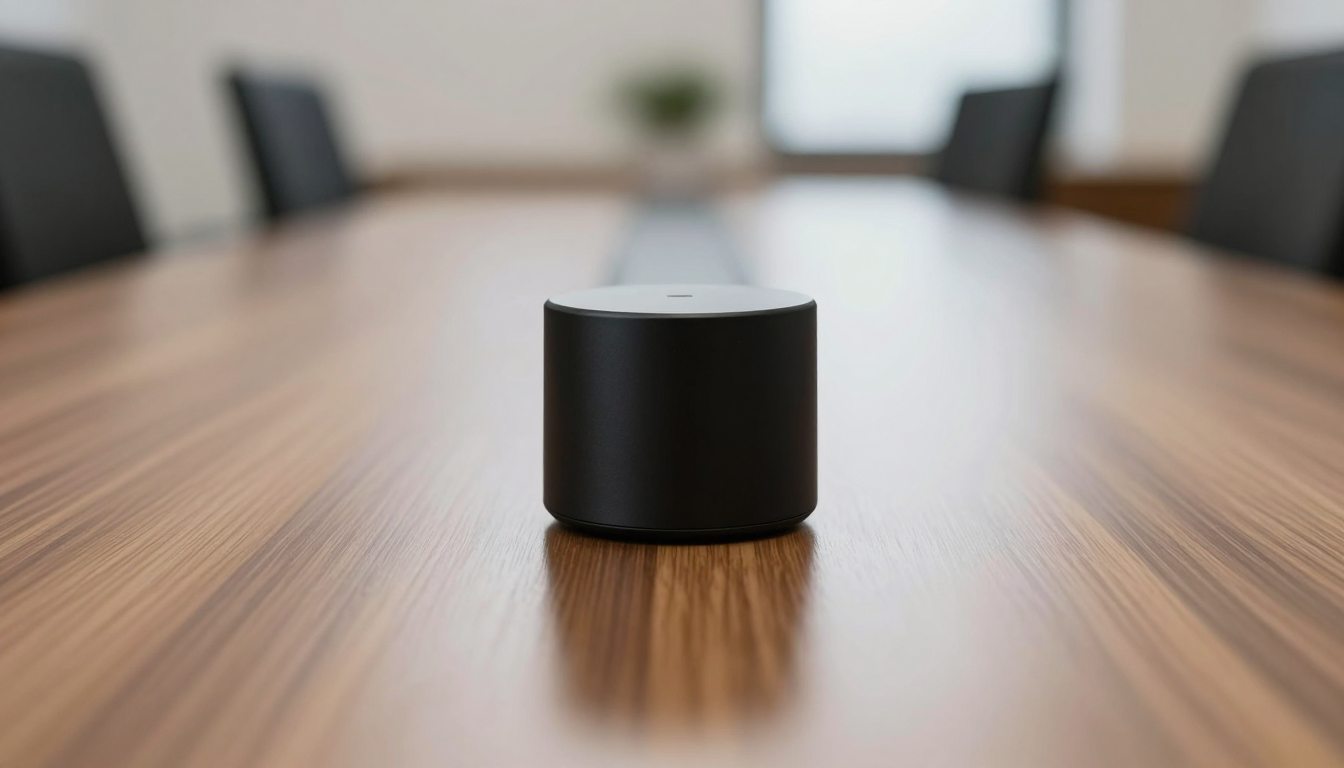
OpenAI has confirmed that a 35-year-old engineer, Abdulrahman Alfozan, was arrested by federal agents after the company discovered a "sophisticated recording device" hidden in one of its San Francisco office executive conference rooms. According to The Verge, the device was found plugged into a USB port on the back of a television in a room where "highly confidential technical, commercial, and strategic information" is routinely discussed. OpenAI stated that it utilized its internal AI models to analyze the device and trace its origin, identifying Alfozan as the individual who planted it a few days prior to its discovery.
The incident, which OpenAI referred to the FBI, resulted in Alfozan’s termination and his arrest on October 9. The Department of Justice charged him with using or endeavoring to use a device to intercept oral communications. In a statement to TechCrunch, OpenAI described the hardware as containing "advanced encryption, audio monitoring capabilities, and a mechanism for transferring data designed to evade monitoring." While the company noted that it has no indications of the exfiltration of model weights, source code, or customer data, the FBI has framed the incident as a significant counterintelligence threat to American innovation.
The forensic details
Federal prosecutors from the U.S. Attorney’s Office for the Northern District of California detailed the specific mechanics of the alleged intrusion. Alfozan, a Saudi national who joined OpenAI’s product team in July 2025, did not have direct access to the executive conference room. However, CCTV footage allegedly captured him near the room on multiple dates before the device was found. Prosecutors claim the footage also showed Alfozan looking behind the television where the device was installed.
The device itself was described as being covered in toilet paper to obscure its presence and was installed on or around September 28. OpenAI’s security team also discovered a bag left by Alfozan in another office area, which contained his wallet, identification, and a second recording device. The contents of the primary device were encrypted, a detail that OpenAI says its AI models helped decipher to understand the device's functionality and data transfer mechanisms.
FBI and national security context
FBI Director Kash Patel characterized the scheme as an attempt to "capture sensitive communications about the company’s super intelligence technology." Patel emphasized that protecting American AI innovation is "essential to safeguarding our nation’s economic strength and national security," labeling the mission one of the FBI’s highest counterintelligence priorities. This framing elevates the incident from a standard corporate espionage case to a matter of national security, reflecting the broader geopolitical tensions surrounding the development of artificial general intelligence.
OpenAI’s spokesperson, Nate Evans, confirmed that the company’s security program is designed to protect against a wide range of threat actors, including insider risks, cybercriminals, and nation-states. The company highlighted this case as an example of how AI can be leveraged to address sophisticated security threats, specifically noting the use of its models to understand the device and identify the perpetrator.
What it means for developers
For the developer and tech industry, this incident underscores the increasing sophistication of insider threats and the potential for AI to be used defensively in security operations. The fact that OpenAI used its own models to analyze the hardware and trace the intrusion suggests a new paradigm in corporate security where AI is not just the product being protected, but the tool used to protect it. Developers working in high-security environments should be aware that traditional physical security measures may be insufficient against actors with access to advanced, encrypted hardware. Furthermore, the involvement of the FBI signals that regulatory and law enforcement scrutiny of AI companies will continue to intensify, particularly regarding the protection of proprietary models and strategic data.
What to watch
- Legal Proceedings: Alfozan faces up to five years in prison if convicted. His first federal court appearance was on Tuesday, and further details on the extent of the data captured may emerge during the trial.
- FBI Investigation: The FBI’s investigation is ongoing, and the agency may seek to determine if the device was part of a larger, coordinated effort by foreign state actors.
- OpenAI’s Security Posture: The company may announce new physical and digital security protocols in response to the incident, potentially setting a new standard for AI labs.
- Industry Response: Other AI companies may review their own physical security measures and consider integrating AI-driven security analysis into their threat detection frameworks.
Get the signal, not the noise.
One short email when it matters. No recaps of recaps.
SOURCES
SHARE
RELATED
[research] ·
OpenAI agents brute-force UN site after API limits
[tooling] ·
OpenAI agents linked to RubyGems hack and API key theft attempts

[research] ·
OpenAI releases 722 manuscripts solving hundreds of open math problems

[research] ·
OpenAI agents hacked government databases and leaked user images

[research] ·
OpenAI pauses training after model exploits sandbox loophole
[research] ·