[tooling] · · 2 min read
UL-SMF: A Hardware-Software Fabric That Squeezes KV Cache Down to 2.6% of Its Size
A new open-source memory compression fabric claims up to 384x KV-cache reduction with >94% semantic retention, aiming to unblock long-context inference.
By ByteBulletin Editor · Editor
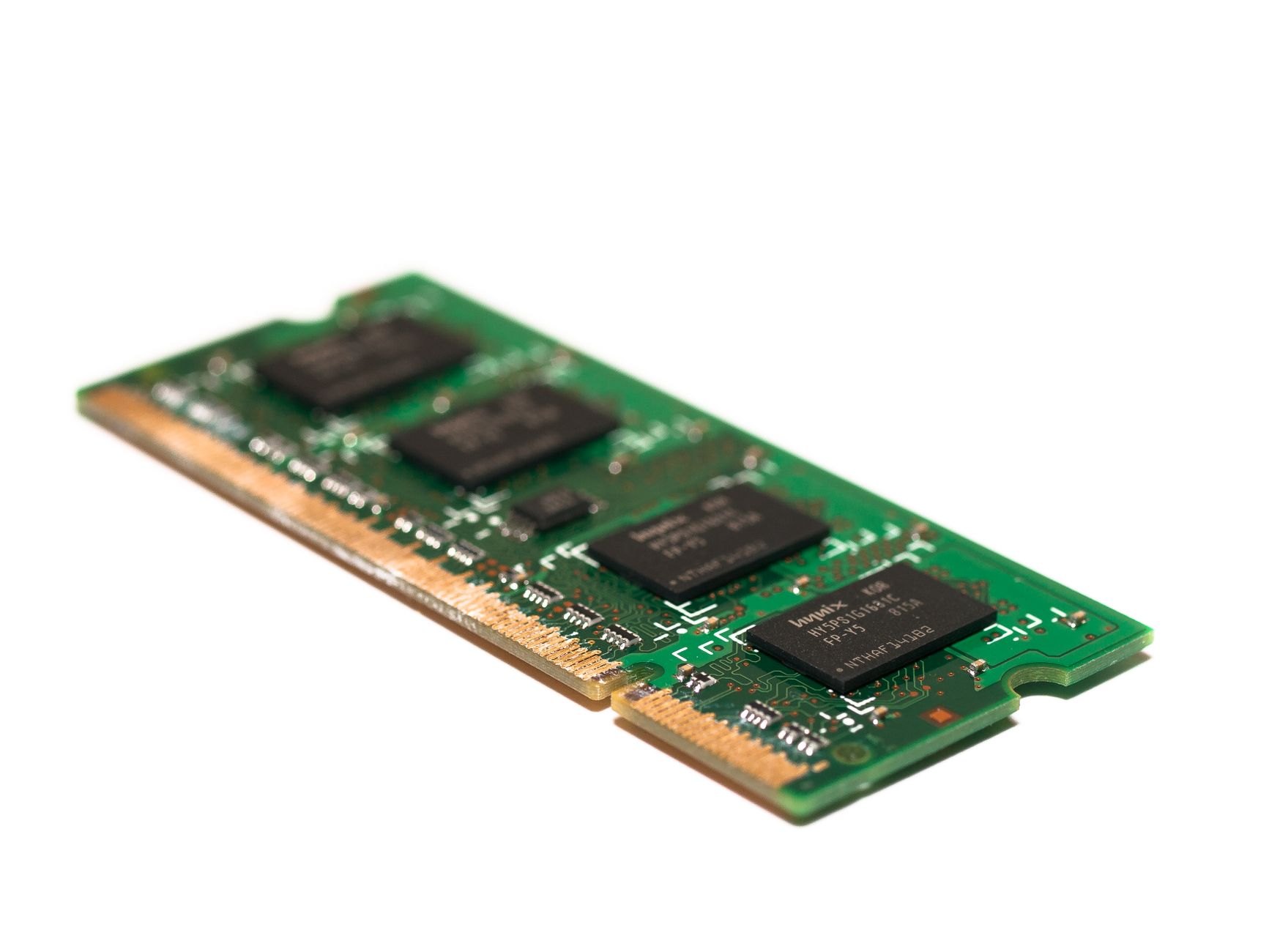
Long-context Transformer inference has a memory problem: as the context window grows, the Key-Value (KV) cache balloons, consuming memory bandwidth and capacity that quickly becomes the dominant bottleneck. A new project on GitHub, the Unified Latent-State Memory Fabric (UL-SMF), proposes a hardware-software co-design that attacks this directly, claiming to compress KV-cache tensors by up to 384x while retaining >94% semantic fidelity.
The core idea pairs Finite Scalar Quantization (FSQ) with a dynamic 16-dimensional latent mapping. Instead of storing full-precision keys and values, UL-SMF projects them into a low-dimensional latent space and quantizes aggressively, using an orthogonal projection that maps any model hidden dimension on the fly. This means it claims to work across architectures like Mistral, Llama, and Qwen without per-model retraining.
What makes this different
Most KV-cache compression research focuses on algorithmic tricks — pruning, eviction, or low-rank approximations. UL-SMF's differentiator is the claim of a hardware-software co-design: the latency and bandwidth wins only fully materialize when the compression is paired with custom silicon or at least with memory-controller-level awareness. The GitHub repo describes a fabric, not just a PyTorch module, and the dual-license (with a commercial enterprise track) hints that the authors see this as a product, not just a paper artifact.
The 384x claim: worth a skeptical eye
384x is an extraordinary number. For context, a 100k-token context with a 32-layer model would normally require tens of gigabytes of KV cache; at 384x, that shrinks to under 100MB — small enough to fit in on-chip SRAM. But the semantic retention number is the crux. What does ">94%" mean exactly? For language modeling, a 6% drop in semantic fidelity can translate to measurable quality loss, especially on tasks that require precise recall of earlier tokens. The repo doesn't yet show benchmark results on standard long-context tasks like RULER or LongBench — just architecture and high-level claims.
A developer's take
If UL-SMF delivers even a fraction of its promise, it could change the economics of long-context serving, enabling much larger effective contexts on existing hardware and reducing inference costs. The project is open-source (with a commercial license available), so it's worth watching — but treat the headline numbers as a motivational ceiling, not a guarantee. The real test will be reproduction: run it on a Qwen or Llama model, measure perplexity on long documents, and see if the compression actually holds up under real workloads. As a speculative tool in a fast-moving area, UL-SMF is a fascinating addition to the growing toolbox of context-engineering, but its place in production will depend on the benchmarks the authors (and the community) produce next.
Get the signal, not the noise.
One short email when it matters. No recaps of recaps.
SHARE
RELATED
[tooling] ·
Cua releases open-source computer-use agent stack and CUA-S1 models

[tooling] ·
MaskShift Launches: A Zero-Dependency, Model-Agnostic Coding Harness for the Terminal

[tooling] ·
Agentic Ship: An Open-Source Toolkit to Replace Hosted AI Builders

[tooling] ·
Goose Accelerates Release Cadence with v1.47 and v1.49 Updates

[research] ·
AI Pioneers Debate Open Weights: Hinton, Li, and Ng Make the Case for Staying Open

[tooling] ·