[tooling] · · 2 min read
Nvidia's AI Moat Is Now About Orchestration, Not Just GPUs
As AI compute scales to gigawatt levels, Nvidia's edge is shifting from raw silicon to the systems that move data around it.
By ByteBulletin Editor · Editor

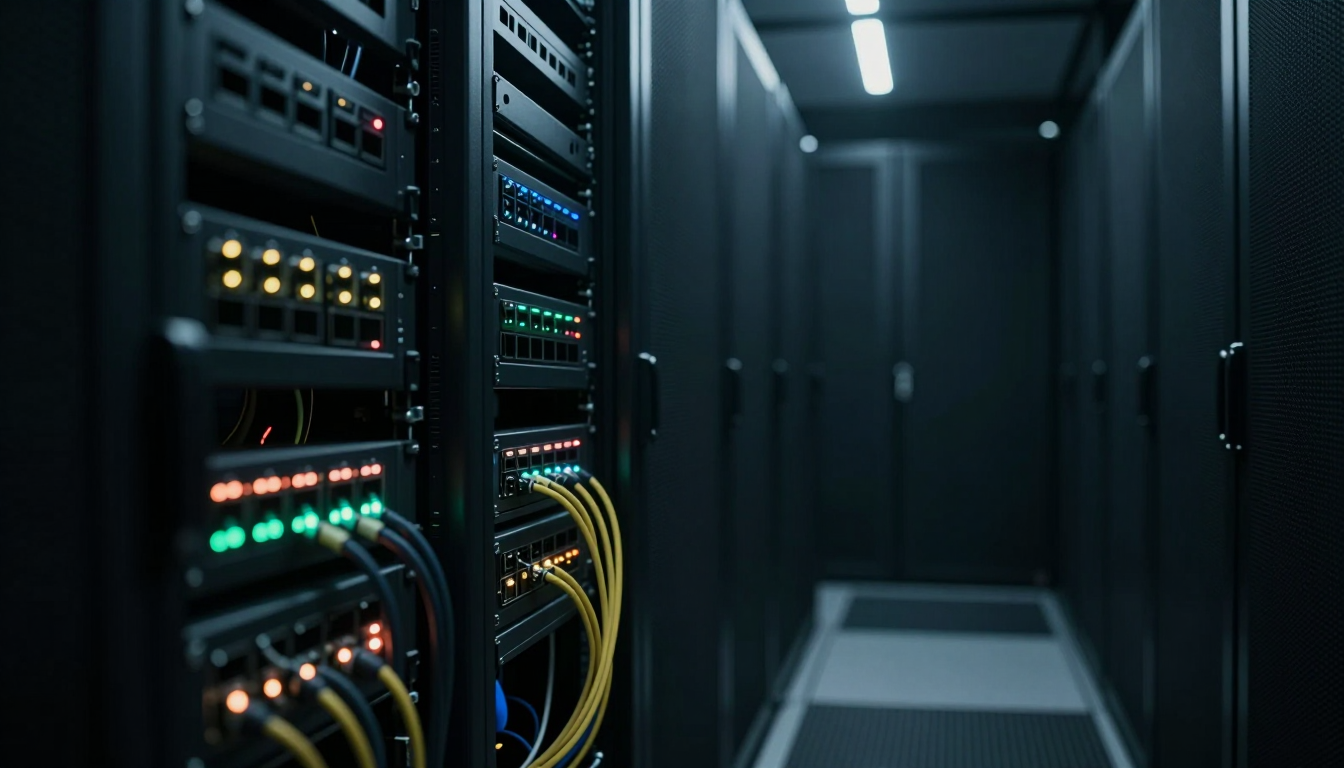
AI-generated illustration · Z-Image-Turbo, self-hosted
For years, the bear case on Nvidia has been deceptively simple: hyperscalers like Amazon and Google are building their own chips, and eventually GPUs become a commodity. That story, while compelling, has started to look incomplete. After this week's earnings, a new narrative is taking shape — Nvidia's real advantage may no longer be the GPU itself, but the increasingly complex infrastructure that surrounds it.
As AI data centers grow into the gigawatt scale, the hard problem has shifted from raw compute to orchestration. Getting data to the right GPU at the right time, keeping memory hierarchies fed, and minimizing token-per-watt costs are now the battleground. And Nvidia has been quietly building the state-of-the-art hardware for exactly that job.
The company's upcoming Vera Rubin architecture is a case in point. It pairs the Rubin GPU with the Vera CPU, the Groq 3 LPX inference accelerator, and specialized storage and networking racks. Jason Hardy, Nvidia's VP of storage technology, framed Vera's role simply: "Vera is important because there's only so much memory that you can put in a single server or any sort of compute platform."
That might sound mundane, but the implications are significant. Hardy says Nvidia has seen "upwards of 3x improvement in these operations" when Vera handles data orchestration, allowing flash storage to reach its full potential without becoming a bottleneck. In a world where every joule counts, that kind of efficiency is a moat of its own.
Nvidia isn't alone in recognizing this. OpenAI's recently announced Jalapeño chip was explicitly designed to "minimize data movement and communication delays" by keeping entire workloads within a single integrated system. It's a different approach — avoid moving data at all — but the underlying logic is identical: the cheapest data movement is the one you don't have to do.
This shift doesn't guarantee Nvidia's dominance. Rivals and hyperscalers will compete fiercely at this new layer. But the competition has moved. Building a rival GPU now matters less than making the entire system sing. And in the early innings, Nvidia is setting the tempo.
Get the signal, not the noise.
One short email when it matters. No recaps of recaps.
SHARE
RELATED

[funding] ·
Nscale Seeks $3.5B in Pre-IPO Financing Ahead of Potential UK Listing

[tooling] ·
Cua releases open-source computer-use agent stack and CUA-S1 models

[tooling] ·
This week in AI dev tools: Agents breach boundaries and benchmarks (Sep 14–20, 2026)

[tooling] ·
Anthropic launches Claude Code Projects for multi-agent workflows

[tooling] ·
This week in AI dev tools: Agents breach systems, safety scrambles (Sep 7–13, 2026)
[tooling] ·