[launches] · · 4 min read
FCC authorizes SpaceX Starmind 1 million satellite AI constellation
SpaceX becomes the first company approved to deploy a million AI-chip satellites, using space-based solar energy to power Earth-bound compute.
By ByteBulletin Editor · Editor
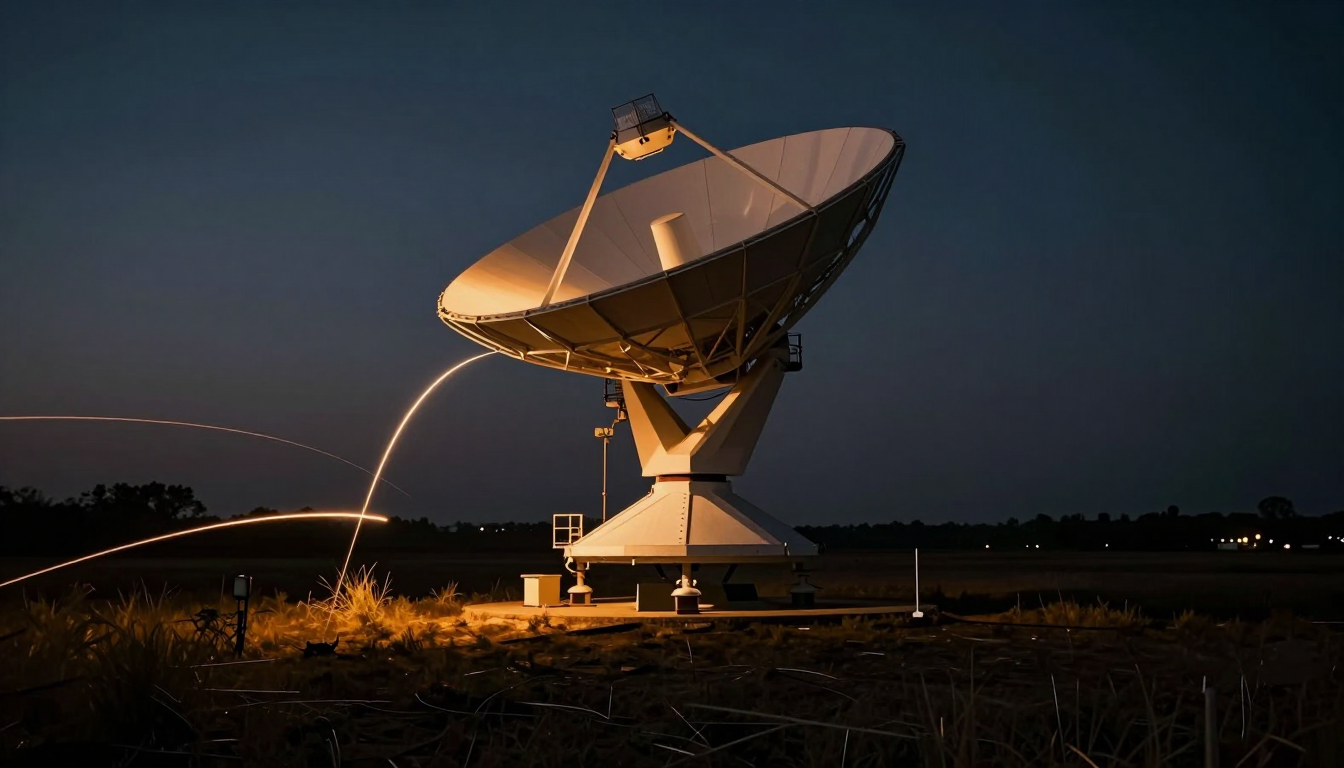
AI-generated illustration · Z-Image-Turbo, self-hosted
The Federal Communications Commission (FCC) has authorized SpaceX to deploy up to 1 million satellites equipped with AI chips as part of its “Starmind” initiative, marking the first time the agency has granted approval for a full constellation of AI satellites. According to The Verge, this move positions SpaceX to capture solar energy in space to power artificial intelligence capabilities on Earth, a strategy that distinguishes it from competitors like Google and Blue Origin who are also pursuing space-based compute.
The approval comes with strict deployment timelines. SpaceX is required to launch at least one satellite by 2033 and must meet the milestone of 1 million satellites by 2040. The FCC also deferred SpaceX’s request to dispose of satellites in “graveyard” orbits above 600km, citing a lack of sufficient information regarding the company’s disposal process plans. Instead, the company is expected to ensure satellites burn up in the Earth’s atmosphere.
Technical Architecture and Infrastructure
SpaceX describes Starmind as a system designed to leverage the constant availability of solar power in orbit to drive energy-intensive AI workloads. The architecture relies on high-speed laser links to transmit data from the satellites back to Earth, integrating directly with the existing Starlink network. This laser-based backhaul is critical for the project’s viability, as it must overcome the latency and bandwidth challenges of communicating with millions of individual nodes in low Earth orbit.
A key component of the hardware strategy is the production of the AI chips themselves. SpaceX plans to manufacture these chips at its upcoming Terafab facility. By vertically integrating the chip fabrication, SpaceX aims to control the cost and performance characteristics of the compute units that will power the constellation. This approach mirrors the company’s strategy with Starlink, where in-house hardware development has been a primary driver of cost reduction and scalability.
Competitive Landscape
SpaceX is not alone in exploring the concept of space-based data centers, but it is the first to receive FCC authorization for a constellation of this scale. Google has already taken initial steps in this direction with the launch of a “Project Suncatcher” AI server satellite last month. Jeff Bezos’ Blue Origin is also involved in the Project Suncatcher initiative, with plans to carry out the first dedicated heavy-lift launch for the project in 2029.
The distinction between SpaceX’s Starmind and these other efforts lies in the scale and the regulatory approval. While Google and Blue Origin are testing individual satellites or small clusters, SpaceX’s approval for 1 million units signals a shift from experimental prototypes to a potential utility-scale infrastructure. The FCC’s decision to approve this specific constellation sets a precedent for how regulators will handle future requests for large-scale space-based compute resources.
Implications for Developers and AI Infrastructure
For developers and AI engineers, the Starmind project represents a potential shift in where and how compute resources are provisioned. While the technology is still in its early stages, with the first satellite not due until 2033, the approval suggests that space-based compute could become a viable option for workloads that are extremely energy-intensive. This could be particularly relevant for training large language models or running complex simulations that require sustained, high-power computing.
However, there are significant technical and logistical challenges that must be overcome. The latency of laser links, even if high-speed, will be higher than terrestrial fiber connections. This makes Starmind less suitable for real-time inference tasks that require sub-millisecond response times. Instead, it may be better suited for batch processing, training jobs, or other workloads where latency is less critical than power efficiency.
Developers should also be aware of the potential cost implications. While space-based solar energy could reduce the cost of electricity, the cost of launching and maintaining millions of satellites is substantial. SpaceX’s vertical integration, including chip fabrication at Terafab, is likely aimed at reducing these costs, but the overall economics of space-based compute remain to be seen.
Regulatory and Environmental Considerations
The FCC’s decision to defer SpaceX’s request for graveyard orbits highlights the ongoing concerns about space debris and the environmental impact of large-scale satellite deployments. The requirement for satellites to burn up in the atmosphere is a standard practice for low Earth orbit satellites, but it raises questions about the long-term sustainability of deploying millions of units. Space agencies and regulators will likely continue to scrutinize the disposal plans of companies like SpaceX to ensure that the growth of space-based infrastructure does not lead to an unsustainable accumulation of debris.
Additionally, the approval of Starmind may prompt further regulatory action regarding spectrum allocation and interference with other satellite systems. As more companies pursue space-based compute, the demand for spectrum and orbital slots will increase, potentially leading to more complex regulatory frameworks and international negotiations.
What to Watch
- First Satellite Launch: Monitor SpaceX’s progress toward launching the first Starmind satellite by 2033. This will be a critical test of the technology and a signal of the project’s viability.
- Terafab Chip Production: Keep an eye on the development and production of AI chips at the Terafab facility. The performance and cost of these chips will be a key factor in the success of the Starmind project.
- Regulatory Developments: Watch for further FCC decisions regarding space debris disposal and spectrum allocation. These decisions will shape the regulatory environment for space-based compute.
- Competitor Moves: Track the progress of Google’s Project Suncatcher and Blue Origin’s heavy-lift launch plans. These initiatives will provide valuable data on the technical and economic feasibility of space-based data centers.
Get the signal, not the noise.
One short email when it matters. No recaps of recaps.
SHARE
RELATED

[launches] ·
Nvidia board rejects Jensen Huang return as CEO
[launches] ·
Google launches TPU 8tx and 8i Max for secure inference
[research] ·
Anthropic data centers to emit 32 million tons CO2 by 2028

[funding] ·
OpenAI lowers funding target to $20 billion

[tooling] ·
Amazon releases TorchNeuron to run PyTorch apps on Trainium

[launches] ·