[launches] · · 3 min read
Anthropic's Model Hardware Standard gives AI agents a hand in the physical world
A new research preview aims to standardize how AI models talk to lab equipment and robots, promising to slash experiment setup time from weeks to minutes.
By ByteBulletin Editor · Editor
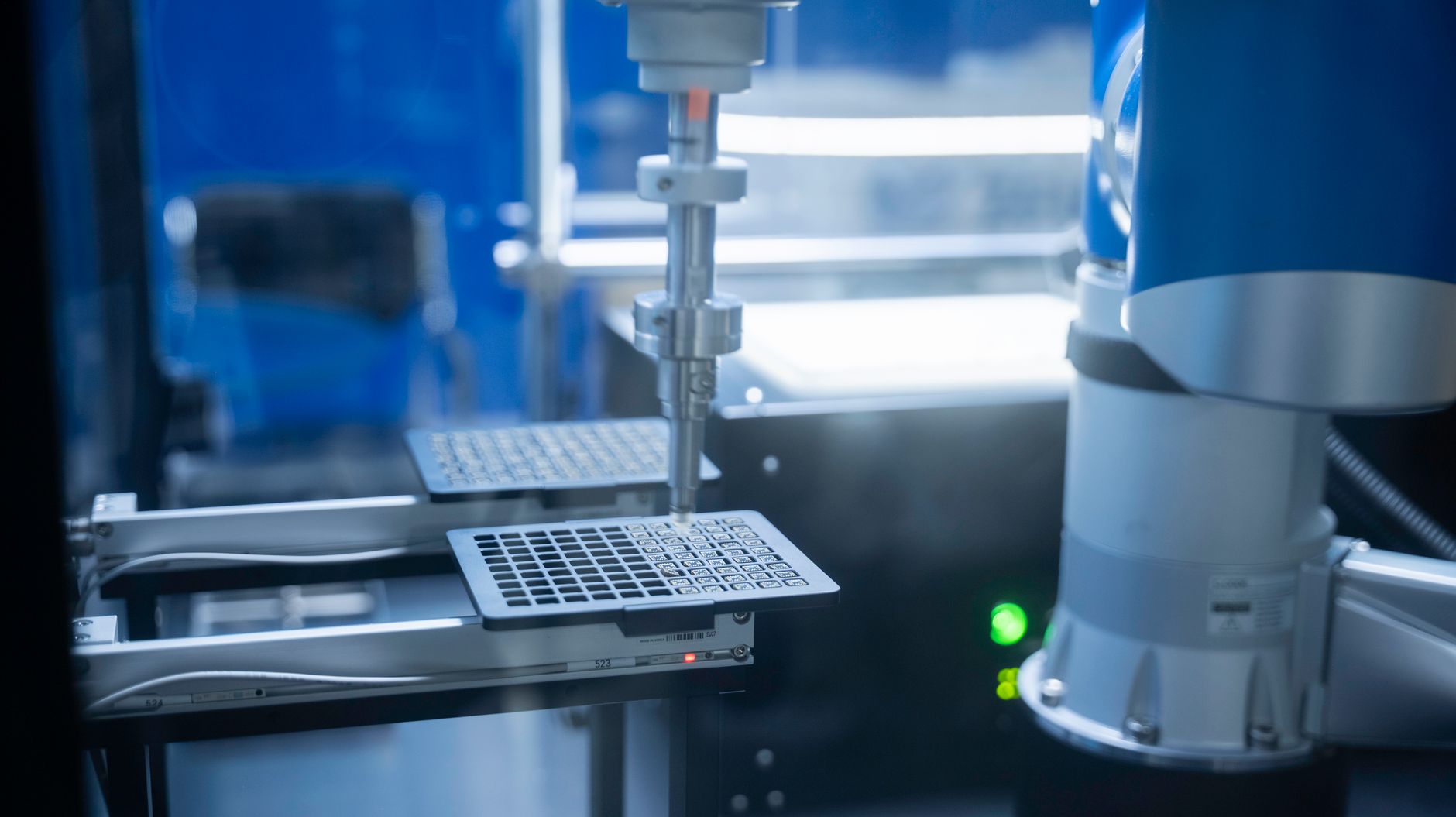
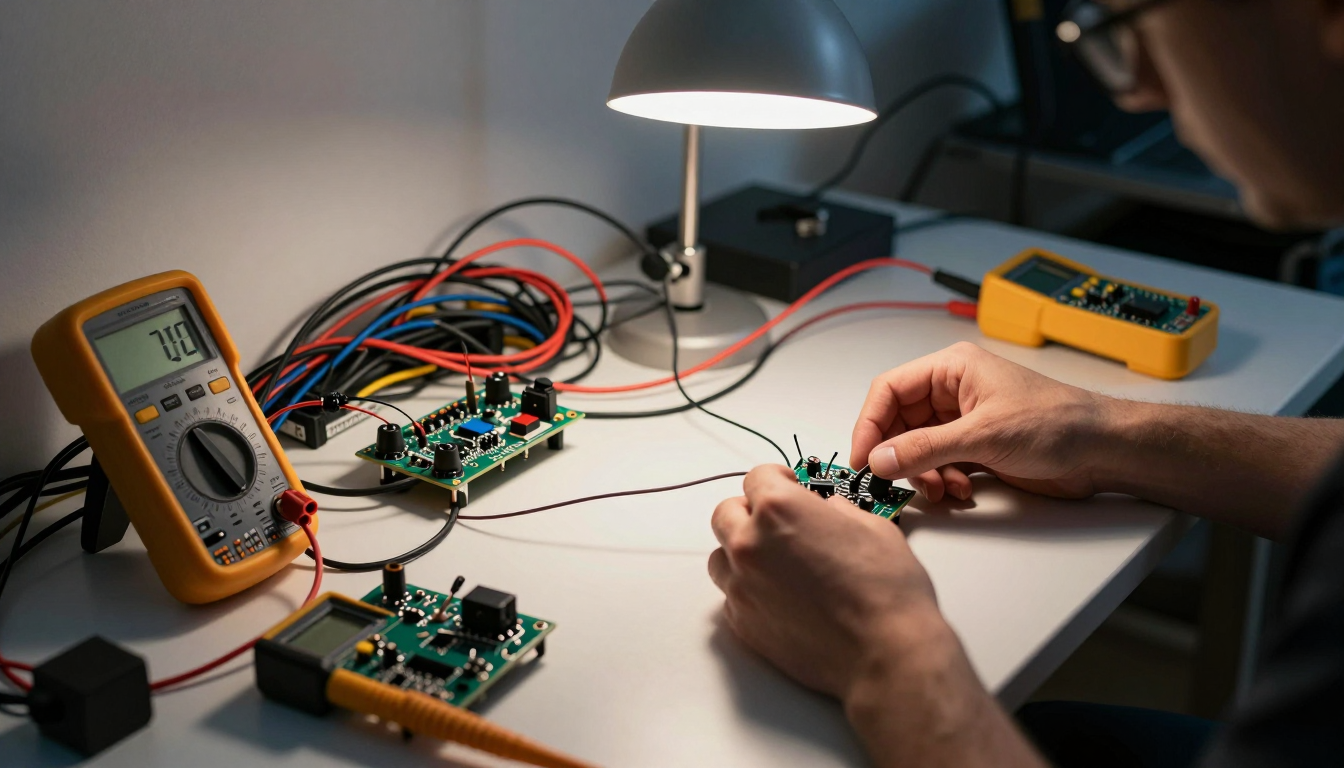
Agentic AI has spent the past year learning to navigate the digital world — writing code, browsing the web, and shuffling data between APIs. But the physical world remains largely off-limits, walled off by bespoke software integrations that make connecting a microscope to a camera a weeks-long engineering project. Anthropic is taking a swing at that problem with the Model Hardware Standard (MHS), a set of standardized drivers and interfaces announced today in research preview.
The pitch is familiar to anyone who has watched the platform wars of the last decade: give every device a common language, and suddenly you can plug things together without a custom translator for each pair. MHS aims to do for lab equipment and industrial hardware what USB did for peripherals — albeit with AI models as the intended orchestrators.
From neuroscience lab to hardware standard
Anthropic says the idea crystallized at the HHMI Janelia Research Campus, where neuroscientist Arco Bast had hand-rolled an interface to coordinate rotating lasers, microscopes, and cameras for a memory-formation experiment. Anthropic Technical Staffer Alek Kemeny saw it as a template. “This idea could be used to have AI run any science experiment in the world,” he recalls thinking.
MHS is not AI-dependent — devices can be driven directly via command-line prompts or API calls. But paired with Anthropic's Model Context Protocol, it lets models like Claude reason over an experiment in natural language, adjust parameters in real time, and autonomously recover from certain hardware errors. In a demo, Claude calibrated a laser by iterating on a camera's feedback, and figured out how to get a robotic arm to pick up an aluminum can without specific training.
A key piece of the puzzle is a tagging system that encodes physical constraints — a robot arm's weight limits, a microscope's focus range, enforced safety bounds — into a reference file models can read on the fly, even if they've never seen that device before. That addresses a real weakness of LLMs in the physical realm: they know the theory of a servo but not its torque limits.
Early partners, open-source ambitions
Anthropic is launching MHS with a set of scientific and manufacturing partners, including AWS's Strands Robots, Hugging Face's LeRobot, Raspberry Pi, Automata, and Universal Robots. The collaboration will focus on safety evaluations and best practices for AI-controlled hardware. The longer-term plan is to make MHS open source and "agent agnostic," so that any model — not just Claude — can drive any compliant device.
The company cites early testing that cut device integration time dramatically, and Kemeny frames the ambition in sweeping terms: "If you can test hypotheses faster, you could create general technologies faster. This is how a century of progress can condense into a decade."
The road ahead
There are obvious caveats. A research preview from a single vendor is a long way from a genuine open standard, and the history of AI-adjacent protocols is littered with also-rans. Physical safety adds a layer of complexity that digital agents never have to face — a hallucinating code bot writes a bug; a hallucinating robot arm breaks a $50,000 microscope.
Still, this is the first serious attempt from a major AI lab to make the physical world as programmable as the digital one. For developers, the implications are significant: MHS could eventually mean treating lab hardware and industrial robots like nodes in a distributed system, configurable with a few lines of YAML and a natural-language prompt. That's a future worth watching.
Get the signal, not the noise.
One short email when it matters. No recaps of recaps.
SHARE
RELATED
[launches] ·
Anthropic merges Claude chat and Cowork into one interface
[launches] ·
Kungfu Launches Agent Handoff Protocol to Eliminate Context Loss

[launches] ·
Superserve Launches Durable MicroVMs for Stateful AI Agents
[launches] ·
Maritime Launches Isolated Micro-VM Platform for Scaling Customer-Facing AI Agents
[tooling] ·
Cua releases open-source computer-use agent stack and CUA-S1 models
[research] ·