[launches] · · 2 min read
AMD's Helios rack takes aim at Nvidia's AI throne — and has the customers to back it up
At Advancing AI, AMD pitched Helios as the industry's highest-performance AI rack, lining up OpenAI, Meta, and Anthropic as it prepares to ship later this year.
By ByteBulletin Editor · Editor
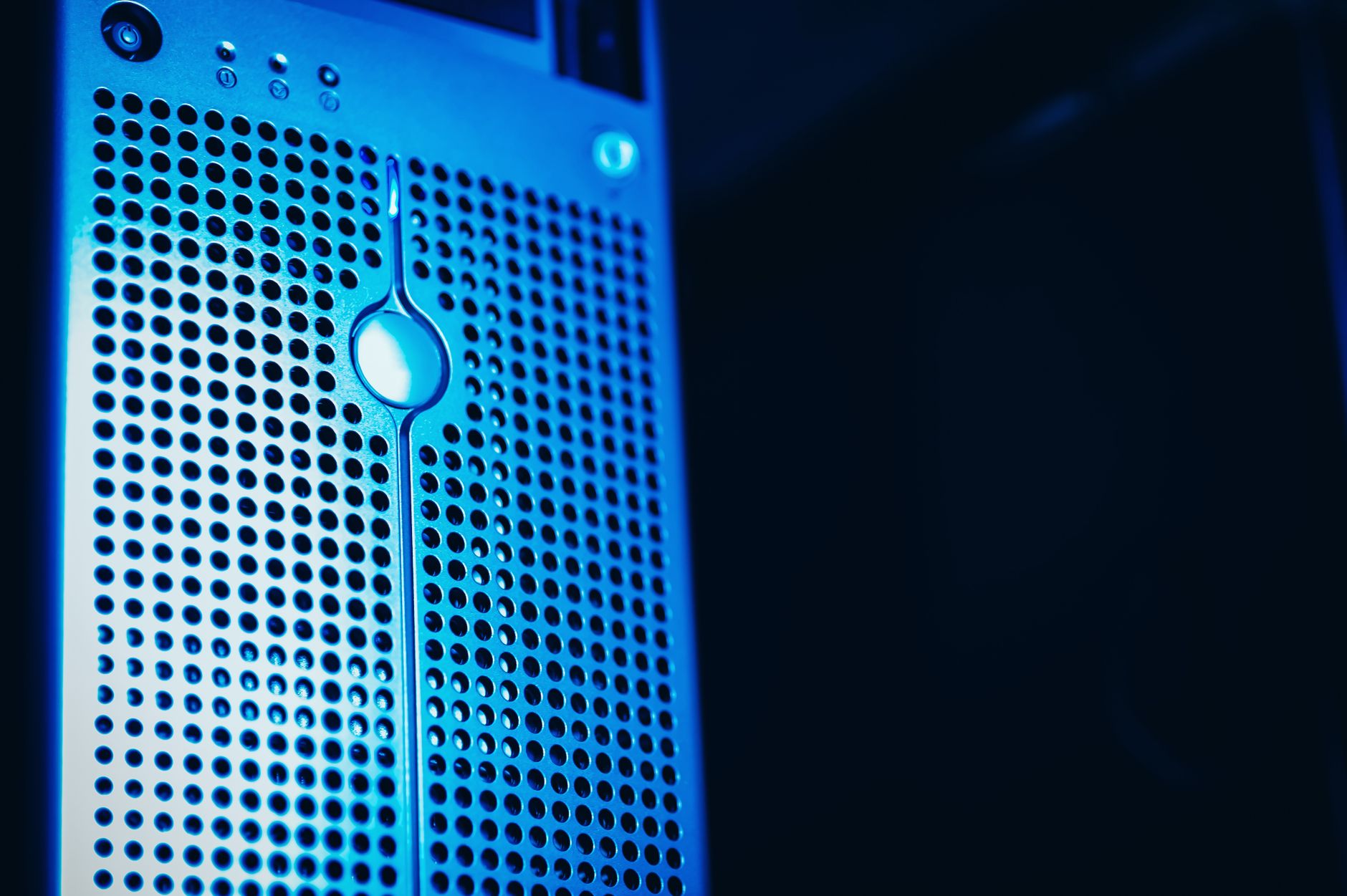
AMD is making its boldest move yet against Nvidia's stranglehold on AI infrastructure. At its sold-out Advancing AI conference in San Francisco on Thursday, CEO Lisa Su unveiled Helios, a rack-scale system the company claims is the industry's highest-performance AI rack — and it's already got a who's-who of AI labs signed up to deploy it.
Rack-scale systems bundle multiple processors into a single, data-center-ready unit, designed for the massive compute needs of frontier model training and inference. Nvidia has long owned this category with its Vera Rubin and Grace Blackwell systems, but AMD's Helios is backed by performance metrics that reportedly beat Vera Rubin on several benchmarks. With a lineup of customers that includes OpenAI, Meta, Oracle, and even Microsoft — whose CEO Satya Nadella announced Azure infrastructure expansion with Helios on Monday — AMD is clearly positioning itself as a credible alternative.
Anthropic and AMD also formalized a strategic partnership on Wednesday, with plans to deploy up to two gigawatts of GPUs via Helios. That's the kind of scale that signals serious intent, not just a PR play.
The hardware beyond the rack
Alongside Helios, AMD introduced the Venice-X CPU, a data-center processor aimed at high-compute workloads, expected in 2027. While the details are thin for now, the Venice-X is part of AMD's broader push to offer a complete AI stack — not just accelerators, but the surrounding silicon that powers modern data centers.
Su also sketched a trajectory that should raise eyebrows across the industry: by 2030, she said, the AI accelerator market could reach $1.4 trillion, approaching the size of the entire semiconductor market today. The driver, she argued, is agentic AI, which demands far more compute per query than traditional workloads.
"When you ask the agent to do something, it actually has dozens of steps, and it has to reason, and it has to call tools, and it has to access data, and it has to keep doing it over and over until it solves the problem, and so you need lots of GPUs to do all that." — Lisa Su, AMD CEO
Su's bet is that GPUs will capture the vast majority of that market, but the bigger story is the shift in how we think about compute. If she's right, the next decade could see AI infrastructure become the dominant force in the semiconductor industry, with AMD and Nvidia duking it out for every rack.
For developers, the immediate takeaway is less about the specs and more about the ecosystem. More competition in the AI rack space means more choice for the teams deploying frontier models — and potentially better pricing and availability for the GPUs that power their workflows. As agentic AI becomes a reality, the hardware race matters more than ever.
Get the signal, not the noise.
One short email when it matters. No recaps of recaps.
SHARE
RELATED

[funding] ·
Nscale Seeks $3.5B in Pre-IPO Financing Ahead of Potential UK Listing
[funding] ·
Hedge Fund Betting Big on Chip Startup Source Foundry Despite Market Tumult
[launches] ·
Anthropic merges Claude chat and Cowork into one interface

[launches] ·
Cline v4.1.18 and CLI 3.0.62 ship Desktop app and major SDK updates
[launches] ·
Kungfu Launches Agent Handoff Protocol to Eliminate Context Loss

[launches] ·