[launches] · · 4 min read
Google Suncatcher satellite runs Gemma 4 in orbit
Google's prototype space data center is online, executing inference tasks with a 20-minute power constraint that highlights the engineering hurdles of orbital AI.
By ByteBulletin Editor · Editor
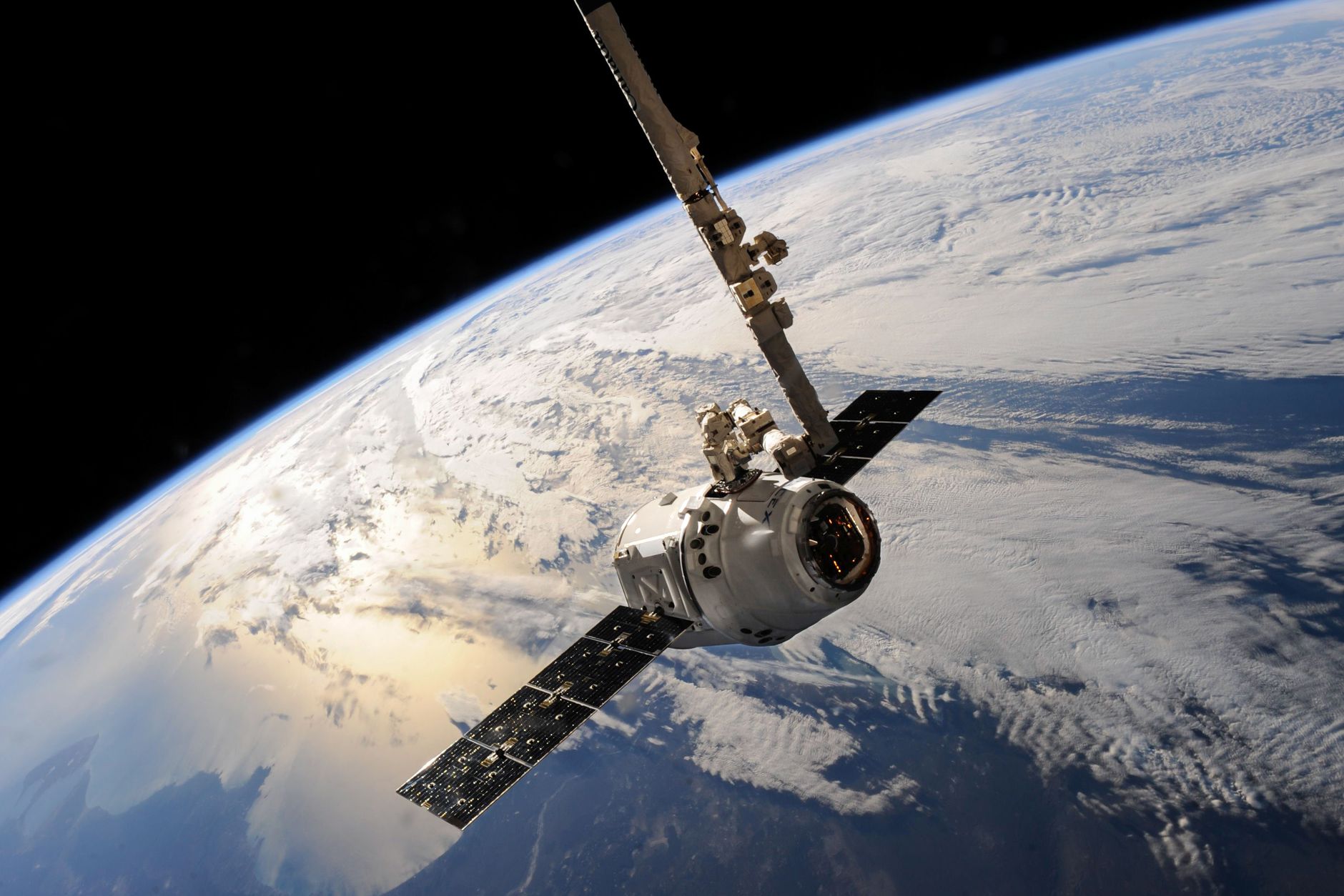
TechCrunch reports that Google's Suncatcher prototype satellite is now online and successfully communicating with the ground. The spacecraft, which launched earlier this month on a SpaceX Falcon 9 rocket alongside more than 100 other payloads, carries four Google Tensor Processing Units (TPUs) and generates up to 1 kW of electricity. The most significant operational detail is a severe power constraint: the satellite can only activate one TPU at a time for approximately 20 minutes, a limitation that complicates both the execution of inference workloads and the management of space-to-ground communications.
Operational details and initial tests
Following a three-week commissioning process to test subsystems, engineers sent their first prompt to the satellite this week. The model pre-loaded on the spacecraft is Google DeepMind's Gemma 4. The initial test prompt asked the model to write a haiku about being in space, resulting in the output: "Blue marble below / Data streams in silent grace / Starlight feeds my core."
Beyond creative writing, Google tested the model with space-themed limericks and, more critically, asked the spacecraft to report on orbital conditions. A spokesperson confirmed to TechCrunch that the satellite is operating nominally. The ongoing test campaign is designed to examine how the TPU chips perform under thermal stress and in the space radiation environment. While Google has extensively tested its TPUs in particle accelerators on Earth, the current mission assesses the real effects of radiation on the hardware. Radiation can cause "bit flips" in computer memory, which corrupts data without triggering typical monitoring tools. Ground testing suggested radiation impact would be minimal for inference workloads but more problematic for training, a hypothesis the team is now validating in reality rather than simulation.
Strategic context and competitive landscape
If the TPUs onboard this spacecraft prove capable, the next step is launching two more satellites equipped with advanced chips in 2027. These future spacecraft will support higher power generation and demonstrate inter-satellite optical links. Google’s Suncatcher project is distinct among visions for space-based data centers because it plans for high-speed links between satellites to support coherent distributed workloads. In contrast, SpaceX’s data centers are expected to use laser links but orbit too far apart to share processing effectively, while companies like Starcloud and Cowboy Space focus on inference loads on individual satellites.
The visions of Google and SpaceX are closely linked. Alphabet holds a significant investment stake in SpaceX, and both companies require the Starship heavy-lift rocket to be fully and rapidly reusable to launch their orbital data centers economically. A peer-reviewed analysis published earlier this month estimated that SpaceX would need to fly Starship 1,800 times to achieve the same learning-driven cost reductions seen with earlier vehicles. Suncatcher is described as a classic Google moonshot, with a focus on designing infrastructure that will be economical in the 2030s. However, the timeline for this infrastructure may depend on how the company responds to near-term AI pressures; Alphabet saw its stock plunge this week after reporting that efforts to insert AI into its search businesses are hurting ad revenue growth.
What it means for developers
For developers and AI engineers, the Suncatcher prototype represents a shift from theoretical space computing to practical, albeit constrained, orbital inference. The 20-minute TPU activation window is a critical constraint for anyone considering orbital workloads. It suggests that current space-based AI is not a drop-in replacement for terrestrial data centers but rather a specialized tool for low-latency, edge-like inference tasks where the cost of downlinking data to Earth is prohibitive or undesirable. The use of Gemma 4, a smaller, efficient model, aligns with this constraint; larger, more compute-intensive models are likely out of reach for current orbital hardware. Developers should watch the 2027 launch of the next two satellites, which will introduce inter-satellite optical links. This could enable distributed inference across a constellation, a capability that is currently absent in single-satellite setups. Until then, the primary value of Suncatcher is as a testbed for understanding how AI hardware behaves in the radiation and thermal environment of low Earth orbit.
What to watch
- 2027 Satellite Launches: The deployment of two additional satellites with higher power generation and inter-satellite optical links is the next major milestone.
- Radiation Data: The results of the ongoing test campaign assessing bit flips and thermal stress on TPUs will determine the viability of space-based inference.
- Starship Reusability: The economic feasibility of scaling Suncatcher depends on Starship achieving rapid reusability, a target that requires thousands of additional flights.
- Alphabet Financials: The company's ability to fund long-term moonshots like Suncatcher may be impacted by near-term pressures on ad revenue from AI integration.
Get the signal, not the noise.
One short email when it matters. No recaps of recaps.
SOURCES
SHARE
RELATED

[models] ·
DeepSeek releases V4.1-Flash-1017 model

[tooling] ·
Google pauses open source bug bounty over AI submissions

[launches] ·
OpenAI releases dots, its always-on personal assistant

[launches] ·
Anthropic embeds METR evaluators and creates public benefit fund
[launches] ·
Replit makes OpenAI default model, ending Anthropic exclusivity

[launches] ·