[research] · · 1 min read
D-Wave Entangles Its Dual-Rail Qubits, Preserving the Error Hierarchy
A Nature paper shows two dual-rail qubits can be entangled quickly without disturbing the dominant photon-loss error, a key step toward simpler error correction.
By ByteBulletin Editor · Editor
AI-generated illustration · Z-Image-Turbo, self-hosted
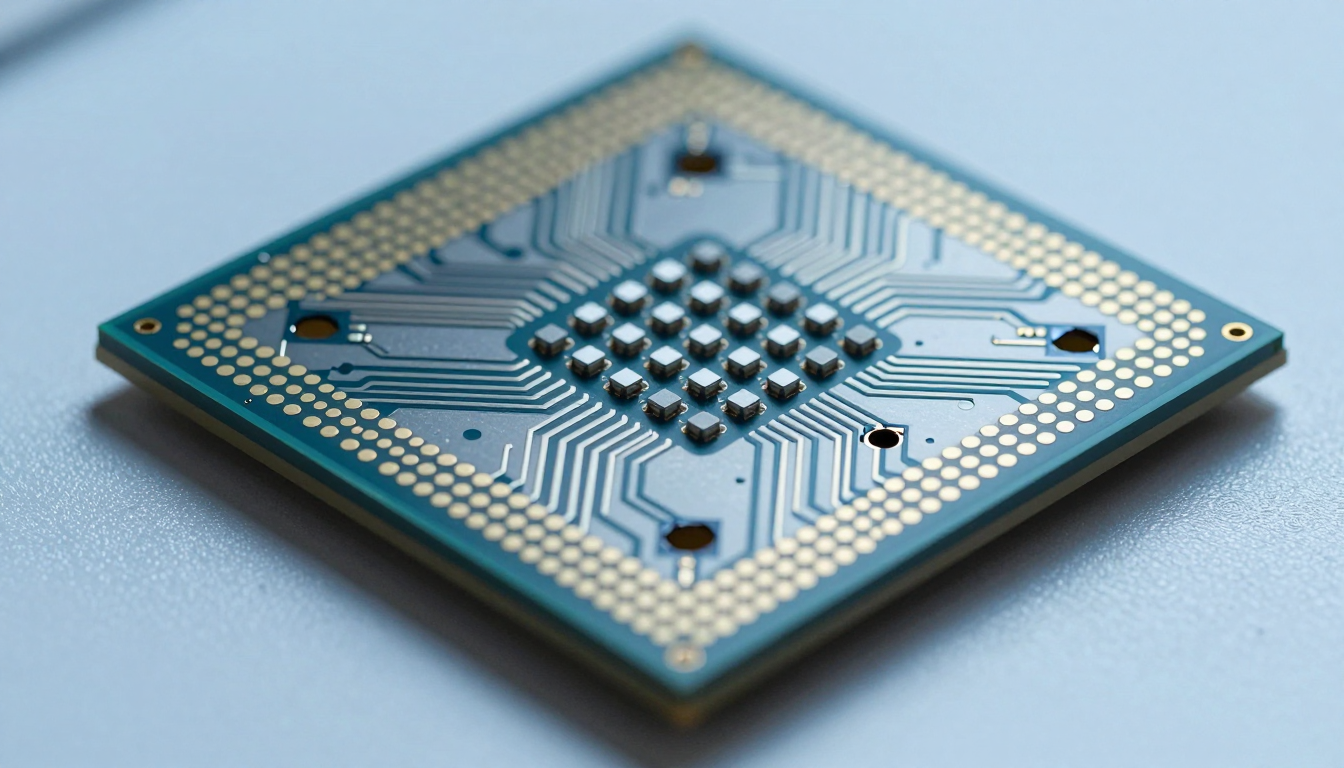
D-Wave, long known for quantum annealing, is pushing into gate-based quantum computing with a distinctive qubit technology. The company's approach, called the dual-rail qubit, encodes a qubit in a single photon that can exist in two coupled resonators. It's the same technology Amazon is using, and it promises a big advantage: the most common error—photon loss—can be detected without needing extra qubits, potentially simplifying error correction significantly.
The catch, however, is that this error hierarchy has been studied primarily in static qubits. If two-qubit gates distorted those error rates, the whole strategy could fall apart. That's why the company's latest result, published in Nature, matters. D-Wave has demonstrated a fast, high-fidelity entangling gate between two dual-rail qubits that preserves the error hierarchy: photon loss remains dominant at about 0.5% per operation, five times more common than any other error, with bit-flips practically nonexistent.
To entangle the qubits, D-Wave used a tunable coupler between the two pairs of resonators. Turning the coupler on and letting it run for roughly 500 nanoseconds creates the entanglement—fast enough for practical use. "We can do these operations in a few hundred nanoseconds, so these are fast operations," said Trevor Lanting of D-Wave. "Not only do you have high fidelity, but you're producing fast entangling operations."
The result rounds out the toolbox for dual-rail qubits, giving developers a complete set of basic operations. But the path forward is not without hurdles. Error rates increase with more gates, likely due to calibration drift, and mid-circuit erasure detection is not yet perfected. The company also needs to develop the classical computing power to interpret error syndromes from a system with such lopsided error rates.
D-Wave plans to reach 181 dual-rail qubits by 2028, giving it time to test error-correction codes like the surface code. If it works, the payoff could be substantial: the ability to build useful logical qubits with fewer physical qubits than other approaches require.
Get the signal, not the noise.
One short email when it matters. No recaps of recaps.
SHARE
RELATED

[research] ·
GPT-6 Astra solves unsolved WWI German radio cipher
[research] ·
Google says Gemini hacking real companies is not misalignment

[research] ·
Hacktron exploits Claude Opus 5 to breach OpenAI

[research] ·
Mozilla report: Open Chinese models close gap to US frontier AI
[research] ·
Anthropic CEO proposes three-step plan to slow AI development

[research] ·