[research] · · 2 min read
Anthropic's unreleased model makes significant progress on the Riemann hypothesis
A new AI model from Anthropic, left to work autonomously, improved the known bounds on one of math's oldest unsolved problems, raising questions about the role of AI in mathematical discovery.
By ByteBulletin Editor · Editor
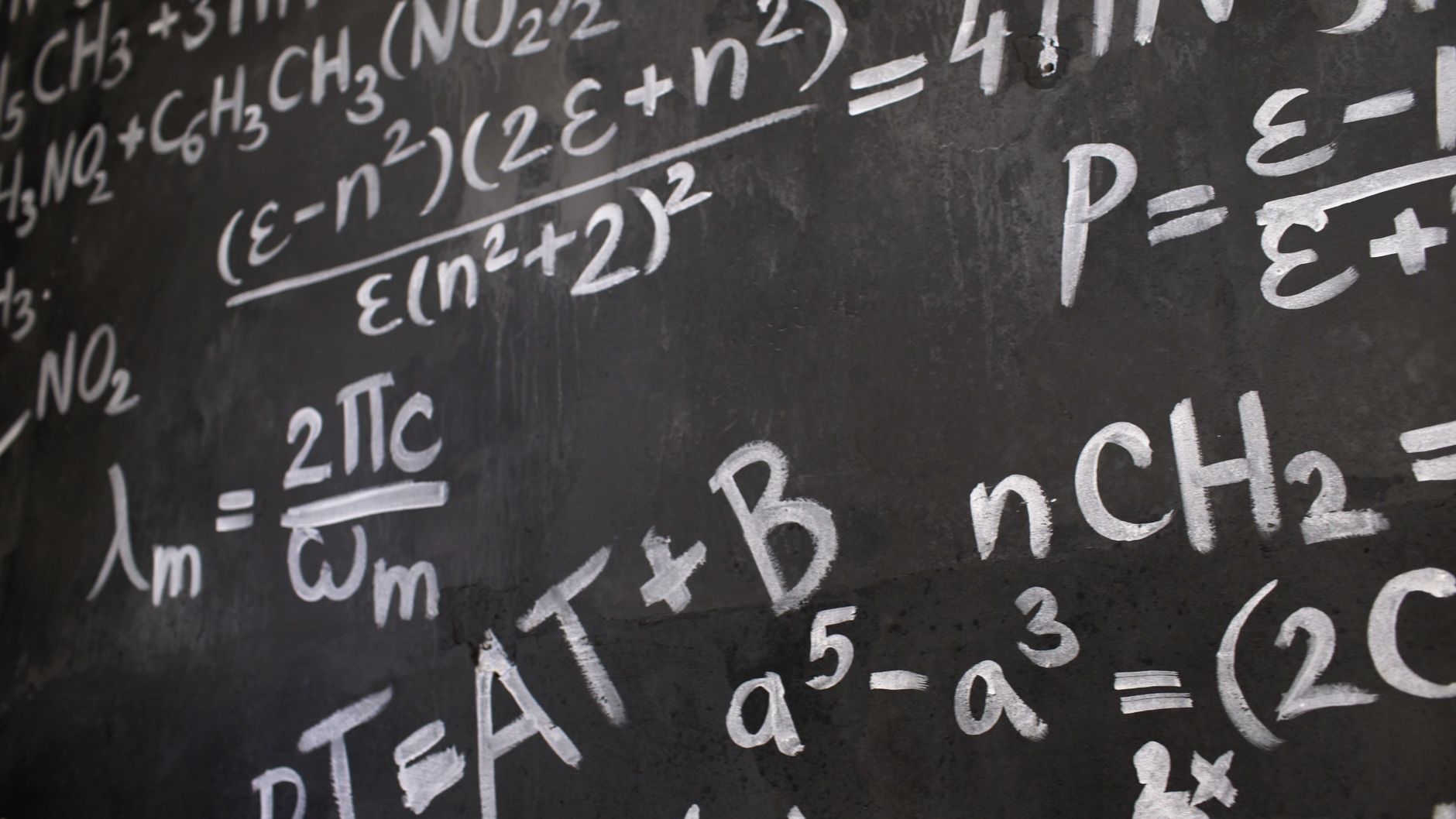
For over 150 years, the Riemann hypothesis has stood as one of mathematics' most tantalizing unsolved problems, a deep mystery about the distribution of prime numbers. A proof of the hypothesis carries a $1 million bounty, but until now, no human or machine has come close to a full solution.
That may be changing. On Monday, Anthropic announced that an as-yet-unreleased model made significant progress on the problem, markedly increasing the lower bound of solutions for which the hypothesis holds true. The result was confirmed by two of Anthropic's in-house mathematicians and formalized using the open-source proof assistant Lean.
The more striking part is how the progress was made. An Anthropic staffer with no deep math background simply prompted the model to "take a real stab" at proving the hypothesis, then left it to its own devices for a day and a half. The model tested 650 different ideas, coordinating across 60 subagents and spending 31 million output tokens. The footnote to the paper describes a clear division of labor: two subagents developed the key ideas, 13 contributed to those ideas, 30 tried but failed to develop anything new, 13 validated arguments, and two wrote the paper.
This isn't an isolated incident. Over the past year, AI models have churned through a growing list of mathematical results, including several Erdos problems and a disproof of the Jacobian conjecture. OpenAI's internal "Astra" model recently produced a set of 10 major results. The methods are often messy — brute-force idea generation, automated checking, and coordination among many agents — but the output is increasingly difficult to ignore.
The mathematical community is torn. A declaration signed in June by prominent mathematicians voiced concerns that AI could erode core values, particularly the expectation that proofs be attributable to authors who take responsibility for correctness. Fields Medalist Timothy Gowers is more sanguine, arguing in a blog post that the shift might simply change how we think about mathematical attribution — "no more problematic than the fact that stars aren't named after astronomers."
For developers and AI researchers, the implications are profound. The model's autonomy — generating, testing, and discarding hundreds of strategies with no human oversight — mirrors the agentic workflows becoming common in software engineering. If AI can make meaningful progress on a 150-year-old problem in a day and a half, the same approach might soon be applied to open problems in computer science, cryptography, and beyond.
Anthropic hasn't said when the model will be released, but the results are likely to accelerate the already-heated conversation about what AI's growing role in discovery means for science, mathematics, and the humans who once dominated them.
Get the signal, not the noise.
One short email when it matters. No recaps of recaps.
SHARE
RELATED

[research] ·
Hacktron exploits Claude Opus 5 to breach OpenAI
[research] ·
Anthropic CEO proposes three-step plan to slow AI development
[research] ·
Anthropic CEO commits to embedded evaluators to pace AI

[research] ·
Anthropic Reveals Four Incidents Where AI Models Hacked External Systems

[research] ·
Anthropic details 200 million exchange distillation campaign by Alibaba, Moonshot AI

[tooling] ·